

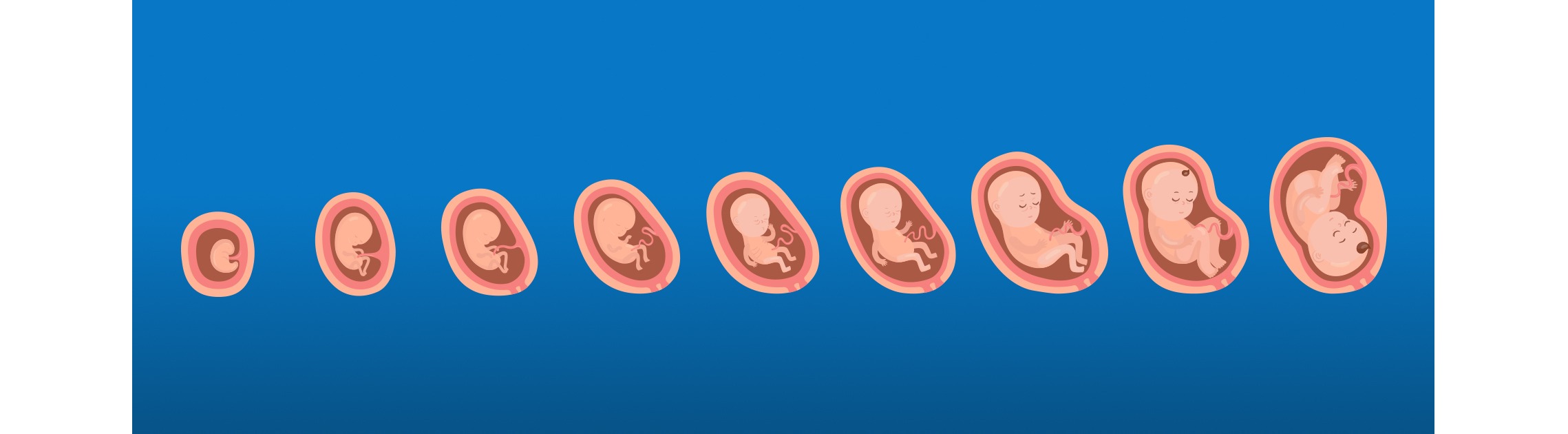
Pregnancy is an amazing journey that turns a single cell human being into a newborn baby in just nine months. Every step along the way reveals the beauty and complexity of human life — even in his or her earliest days.
This guide breaks down what happens each week of pregnancy, from before conception to the moment of birth. Whether you’re expecting, learning, or advocating for life, this simple overview shows just how much happens in the womb.

Weeks 1–2: Preparing for Life
Even before conception, both the mother and father play a role in creating new life.
- A woman’s body prepares for pregnancy by releasing an egg.
- A man’s body produces sperm, which can fertilize the egg.
- (Week 1 of the baby’s life based on LMP (Last Menstrual Period), which refers to the first day of a woman’s last menstrual cycle and is used to calculate the gestational age, week of pregnancy, and due date.)
Week 3: Life Begins
- When the sperm and egg meet (fertilization), a new human being is formed — called a zygote. And this is an extraordinary moment: “When a sperm meets an egg, sparks fly—literally. According to a study published in Scientific Reports, an explosion of zinc fireworks occurs when a human egg is activated by a sperm enzyme.”
- This one cell already contains everything needed to become a fully grown adult!
- The zygote begins dividing and becomes a blastocyst as he or she travels through the Fallopian tube.
- He or she contains a complete set of DNA — a unique human blueprint.
- This is the first week after conception, though a woman may not know she is pregnant yet.

Week 4: Implantation
- The tiny embryo attaches to the lining of the uterus.
- This process is called implantation and allows the baby to start receiving nourishment from the mother.
- This is when pregnancy hormones begin, and a pregnancy test may show positive soon after.
- By the end of the 4th week, the blastocyst is about 2 millimeters long — about the size of a poppy seed.
Week 5: A Body Plan Forms
- The embryo’s cells start forming into specific tissues, such as the heart and brain.
- This is the start of recognizable body structure.
- The baby is about the size of a sesame seed.
Week 6: First Heartbeat
- The baby’s heart begins beating (about 110 beats per minute) and circulating blood.
- The neural tube, which becomes the brain and spinal cord, is forming.
- The baby is about the size of a lentil.
Week 7: Major Organs Begin to Form
- Organs such as the liver and kidneys start developing.
- The brain grows rapidly, producing hundreds of thousands of new neurons each minute.
- The baby is now about the size of a blueberry.

Week 8: First Movements
- The baby begins to move and can respond to touch.
- Facial features and fingers continue forming.
- After the 8th week, healthcare providers refer to the embryo as a fetus. The baby will remain a fetus until birth.
- By the end of the 2nd month, the fetus is about 0.5 to 1 inch long — about the size of a raspberry.
Week 9: Brain Waves and Hiccups
- Brain activity begins and can be recorded.
- Elbows appear and toes are visible
- The baby may hiccup or move his or her arms and legs.
- The baby is about the size of a grape.

Week 10: Body Parts Are Formed
- More than 90% of body parts are in place.
- The arms, hands, fingers, feet, and toes are fully formed (no more webbed fingers).
- The baby shows left – or right-handed movement.
- Eyeballs finish forming.
- The baby is about the size of a strawberry.
Week 11: Active Movement
- The baby rarely stays still, often moving inside the womb.
- Genitals begin to form, and sex differences start to appear.
- All the baby's vital organs are in place, and many have already started to function.
- The baby is about the size of a fig.

Week 12: Heartbeat and Fingerprints
- The baby’s heart will have beaten over 10 million times.
- All the organs, limbs, bones, and muscles are present.
- Fingerprints begin to form.
- Tooth buds and fingernails develop.
- The baby is now about the size of a lime.

Week 13: Growing and Strengthening
- Facial features become clearer.
- The baby’s heart pumps about 6 quarts of blood per day.
- The mother’s antibodies begin to protect the baby.
- The baby is about the size of a plum now.
Weeks 14–16: Touch, Taste, and Movement
- The baby begins making purposeful movements, such as sucking his or her thumb or smiling.
- Taste buds develop.
- Boys and girls begin moving differently.
- Scientific evidence shows that babies can feel pain by 12–15 weeks.
- The baby is now about the size of an apple.

Weeks 17–18: Feeling and Sensing
- The mother may start to feel kicks.
- The baby shows stress responses to unpleasant stimuli.
- The baby may already have a sleeping schedule and may be awoken by loud noises.
- The baby is about the size of a bell pepper.
Weeks 19–20: Practicing Life
- The baby breathes, cries, and sucks in the womb.
- The rooting reflex (important for breastfeeding) appears.
- The baby feels pain and can respond to touch and sound.
- By the end of the 5th month, the fetus is about 9 to 10 inches long (about the size of a banana) and weighs about 1 pound.
Weeks 21–22: Viability Begins
- The youngest premature baby to survive was born at 21 weeks.
- Babies born this early may survive with medical help.
- The baby is now about the size of a mango or sweet potato.

Month 6 (Weeks 23–27): Responding to the World
- The baby responds to music, reading, and light.
- Eyes continue maturing; the fetus can open his or her eyes and blink.
- Breathing practice continues.
- By the end of the 6th month, the fetus is about 12 inches long (about the size if a grapefruit or the head of cauliflower) and weighs about 2 pounds.

Month 7 (Weeks 28–31): Learning and Sleeping
- Sleep cycles develop.
- The baby starts learning sounds and smells from the womb.
- The brain overproduces neurons — more than at any other time.
- At the end of the 7th month, the fetus is about 14 to 15 inches long (about the size of a large cabbage) and weighs between 2 and 3 pounds.
Month 8 (Weeks 32–35): Brain and Lungs Mature
- The baby’s brain forms 40,000 new connections per second.
- The baby learns nursery rhymes, songs, and even words!
- Kicks and jabs feel more like pokes now that the fetus is getting cramped in the amniotic sac.
- Around this time, the baby is about the size of a honeydew melon.
Month 9 (Weeks 36–40): Ready for Birth
- The baby’s lungs finish developing.
- The baby settles into a head-down position for birth.
- Most babies are born around 40 weeks.
- At birth, the baby knows his or her mother’s voice, smell, and face.
- The fetus is about 17 to 19 inches long and weighs from 6 to 7 pounds and is about the size of a pumpkin.
Why This Matters
From the moment of conception, a new human being begins to grow — with their own DNA, body, and future. Week by week, that tiny person becomes increasingly visible to the world, but they are fully human from the very beginning.
At Human Coalition, we believe every life is precious and deserves protection — no matter how small.

Want to Learn More?
- Explore more about early life and pro-life advocacy
- Need support for an unexpected pregnancy?
- Join the movement to make abortion unthinkable and unnecessary
- Arizona State University: https://embryo.asu.edu/search?search_api_fulltext=embryology
- The Endowment for Human Development: https://www.ehd.org/see-baby.php
- Live Action: https://babyolivia.liveaction.org/
This content is provided for informational purposes only. It should not be construed as medical advice or a replacement for consultation with a healthcare provider.