

What does God see when He looks at a baby in the womb?
For you created my inmost being;
you knit me together in my mother’s womb. (Psalm 139:13, NIV)
What does God see when He looks at a baby in the womb? He sees a complete human being, a child who will become a man or a woman with all the potential in the world.
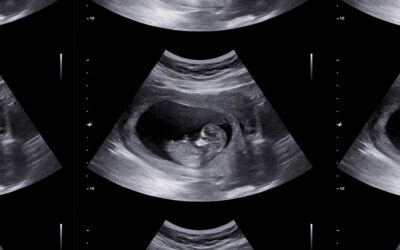
A mother may see an ultrasound image. A doctor may see a developing baby. The world may see a statistic, a pregnancy, or a choice. But God sees a person.
David describes God’s intimate involvement in human life: “For you created my inmost being; you knit me together in my mother’s womb.” (Psalm 139:13, NIV)
And then David says: “Your eyes saw my unformed body.” (Psalm 139:16, NIV)
Think about that. Before David could be seen by the world, he was seen by God. Before anyone could know his name, God knew him. Before he had taken his first breath, God was already at work.
David doesn’t describe himself as an accident or merely the result of biological processes. He recognizes God as the Creator of his innermost being.
Before a child is held by human hands, that child is already known and held by God.
Psalm 139:13 — God Creates and Knits Life Together
There is something deeply personal about the way David describes the womb. He doesn’t portray God as distant from the child developing there; he describes a Creator who is intimately involved. “You knit me together.” “You saw my unformed body.” “My frame was not hidden from you.”
The imagery is tender and intentional. The image of God ‘knitting’ a person together in the womb further emphasizes the care, precision, and personal attention that He invests in everyone. This isn’t mass production. It is intimate craftsmanship.
Before we were recognizable flutters in our biological mothers’ wombs, God recognized each of us as the person He was fashioning into His image. From conception, we were people of value, purpose, and dignity in the eyes of God. Before any other human knew we existed, our Father in heaven had a purpose for our lives and claimed us as His person!
The baby in the womb is not invisible. The child is not forgotten. The baby is not an accident. God sees and knows each child intimately because He made them. He knows us thoroughly — our thinking, beliefs, feelings, qualities, wants, and needs — far more than we are aware of ourselves. This theme of God’s complete knowledge of humanity runs throughout Psalm 139.
Psalm 139:14 — You Are the Work of a Master Craftsman
David writes: “I praise you because I am fearfully and wonderfully made; your works are wonderful, I know that full well.” (Psalm 139:14, NIV)
What does it mean to be “fearfully and wonderfully made”? Fearfully carries the idea of something that inspires astonishment and awe and reverence, while wonderfully points to something distinct and unique.
Every human being is unlike any other. Every baby is a special creation of God. As Ray Fowler put it: “You are the work of a master craftsman who personally fashioned you in the womb as a unique and beautiful work of God.”
That establishes the way we look at human life.
A baby’s worth is not determined by whether that child is planned. It isn’t determined by whether that baby is convenient. It isn’t determined by what that child will accomplish. And it certainly isn’t determined by whether that baby has been born yet.
Human worth doesn’t come from accomplishments, abilities, independence, social status, or stage of development. David points instead to his Creator.
Because God is the One who forms human beings, then human life has inherent dignity.
“So God created mankind in his own image, in the image of God he created them; male and female he created them.” (Genesis 1:27, NIV)
A person’s dignity doesn’t disappear because someone is young, vulnerable, or dependent on others. And it isn’t something we earn later in life.
Man is made in the image of God, and nothing can remove that image. Knowledge of this truth is the foundation of our dignity and worth.
Psalm 139:15 — God Sees What People Cannot See
“My frame was not hidden from you when I was made in the secret place. When I was woven together in the depths of the earth.” (Psalm 139:15, NIV)
There was a time when a baby in the womb could not be seen by anyone but God. Now, with technological advances, we can see the baby that is developing inside the mother in a secret place.
It’s secret because only a select few, if anyone, will peer into the womb and see what God already sees — a human life. We can only see portions of the process while God sees the whole endeavor.
“My frame” refers to the embryonic bones and ligaments, muscles, organs, and flesh of the growing baby. The baby has a heartbeat 22 days after conception. In just six weeks, the brain waves of the baby can be determined. Within eight weeks the stomach, liver, and kidneys are operating, along with the formation of his or her fingerprints. At nine to 15 weeks the preborn baby can feel pain.
Being “woven together” reinforces the personal and intentional imagery from verse 13. God’s knowledge is not merely intellectual. He knows the person being formed.
- A child in the womb may be unseen by society but is never unseen by God.
- “Hidden” does not mean “insignificant.”
- The mother experiencing an unexpected pregnancy may also feel unseen, forgotten, or alone — but God sees her too.
And God’s knowledge doesn’t stop at what is happening right now in the womb.
Psalm 139:16 — God knows our days
“Your eyes saw my unformed body; all the days ordained for me were written in your book before one of them came to be.” (Psalm 139:16, NIV)
David isn’t looking backward at a life that already unfolded; he’s marveling at God who knew his days before they were lived.
God has a plan and a purpose for each child’s life even before the baby is born. Before any other human knew we existed, our Father in heaven had a purpose for our lives, which means the baby in the womb is not merely a possibility. That child already has dignity, already has value, and already matters to God.
Before your first breath, God knew you. Before your first cry, God saw you. And before anyone could tell your story, He already knew the days that were ahead of you.
And if that is true of every human life, then we cannot look away from the baby who cannot yet speak for himself, we cannot forget the mother who is afraid, we cannot decide that some lives are worth protecting only when they are wanted, planned, or convenient.
Every human life is precious because every human life is the work of a Creator who sees, knows, and loves His creation — fully made in His image.
What About the Mom?
The truth is that Christians should never look at a mother facing an unexpected pregnancy with judgment or condemnation. Instead, it should lead us to love her more deeply because the same God who sees the child also sees the mother. He sees her fear, her uncertainty, and the circumstances she may not know how to overcome.
And if we believe that every human life is valuable, then our response cannot stop at telling her that her child has value. We have to show her that she has value too.
That’s why being pro-life means caring for moms as well as protecting children.
Human Coalition’s mission is built around that very idea: “Rescuing Children Through Caring for Moms.” Our work is pioneering ways to reach women facing unexpected pregnancies, rescuing children from abortion, and restoring families through ongoing care.
A culture of life isn’t built through condemnation. It’s built when women know they are not alone, when a frightened mother can find someone willing to walk beside her. It’s built when a child is welcomed and valued. It’s when the Church, communities, and individuals decide that caring for vulnerable families is not someone else’s responsibility.
Before a child is held by human hands, that child is already known by God.
And because God sees every child and every mother, Christians are called to see them too — with courage, compassion, and hope.
When we see what God sees, we recognize that no child is invisible, no mother is alone, and every human life has divine dignity and value.
Call to action:
- How can you encourage a mother facing an unexpected pregnancy?
- How can you support a local pregnancy center?
- How can your church become a place where mothers receive tangible and emotional care?
- How can you speak about the value of the preborn baby in a way that communicates hope?