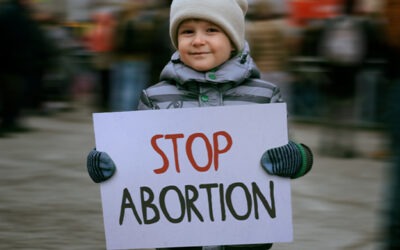


As Scott Klusendorf argues, “Either you believe that each and every human being has an equal right to life, or you don’t.” There is no middle ground.
“Pro-life Christians provide one answer. Although humans differ in their respective degrees of development, they’re nonetheless equal because they share a common human nature that bears the image of their Creator. All humans have value simply because they’re human.” (Scott Klusendorf, The Case for Life, pg. 2)
If rights depend on characteristics that some humans possess and others lack, then human equality itself collapses.
This question forces us to confront a deeper issue: Are human rights granted by governments, or are they intrinsic to our very existence?
Rights Are Not Granted — They Are Inherent
If rights were merely legal permissions, they could be revoked whenever a government or majority deemed it convenient. History offers tragic examples of this reality. Instead, the pro-life position maintains that rights are intrinsic to human beings, not awarded by institutions. They flow from what humans are, not from what they can do.
America’s founders shared this understanding. They believed human nature was fixed and knowable, and that natural rights — chief among them the right to life — were inseparable from that nature. Legal or “positive” rights, such as voting or driving, come later and depend on age, citizenship, or accomplishment. But the natural right to life exists simply because a human being exists.
This distinction is critical, because when pro-lifers argue that the unborn have a right to life, they are making the claim that the human fetus has a natural right not to be unjustly killed. It’s a right that flows inherently from his or her humanity.
Biology Clarifies Who Is Human
Once rights are grounded in human nature, the next logical question becomes unavoidable: When does a human being begin? Modern embryology provides a clear answer.
From the moment of fertilization, a new, distinct human exists. The embryo is not part of the mother’s body, nor a potential human being — it is a human being with potential. Advances in science have confirmed what embryologists now overwhelmingly agree upon: Human life begins at fertilization. A comprehensive 2018 study found that 95 percent of biologists affirmed this biological fact (5,212 out of 5,502 of biologists surveyed).
Even at the earliest stages, the embryo meets all the criteria for biological life: metabolism, growth, responsiveness, and self-directed development. The science is not ambiguous.
With this clarity in place, the debate shifts from biology to morality.
A Simple Moral Argument
Scott Klusendorf presents a straightforward syllogism that cuts through emotional rhetoric:
- It is wrong to intentionally kill an innocent human being.
- Abortion intentionally kills an innocent human being.
- Therefore, abortion is morally wrong.
This argument does not rely on religious belief. It rests on moral reasoning that most people already accept in every other context. If the unborn are human, abortion is a grave injustice. If they are not human, then abortion carries no more moral weight than pulling a tooth.
Everything hinges on the humanity of the unborn. And as science confirms such humanity, moral consistency demands a response.
The Christian Witness Has Been Clear
Christianity has historically spoken with remarkable consistency on the pro-life issue. From the first century onward, the church has affirmed the personhood and value of unborn children. This conviction has crossed denominational lines and endured cultural upheavals.
Prominent Christian leaders throughout history have echoed this belief. John Calvin is attributed as saying, “The unborn child…though enclosed in the womb of its mother, is already a human being…and should not be robbed of the life which it has not yet begun to enjoy.”
Dietrich Bonhoeffer, writing in the shadow of Nazi atrocities in 1945, said, “To kill the fruit in the mother’s womb is to injure the right to life that God has bestowed on the developing life.”
This unified witness matters, especially in an age when some claim Scripture is unclear or silent on abortion. In reality, Scripture consistently portrays God as personally involved with human beings before birth. Passages involving David, Jeremiah, and John the Baptist demonstrate that unborn children are known, valued, and capable of human response — even joy.
Scripture, Dignity, and Moral Responsibility
The Bible teaches that all human beings are made in the image of God, granting them inherent dignity and worth. This truth applies equally to the born and unborn. Abortion, which intentionally destroys innocent human life, stands in direct opposition to this reality.
At the same time, Scripture does not leave those affected by abortion without hope. The same God who affirms the sanctity of life also offers grace, forgiveness, and restoration. The pro-life position is not merely about condemnation; it is about truth paired with compassion.
In a culture marked by confusion, the biblical vision of human value provides moral clarity. It reminds us that human worth does not change with size, level of development, environment, or degree of dependency.
Why This Question Matters Now
Abortion is not merely a political issue — it is a human rights issue. As Klusendorf argues, it may be the greatest civil rights challenge of our time. If society abandons the principle that all human beings have an equal right to life, no other rights remain secure.
Ultimately, the question “Where does the right to life come from?” reveals far more than opinions about abortion. It exposes what we believe about human equality, moral truth, and the value of every human life. And once those foundations are examined honestly, the conclusion becomes difficult to avoid.
Either all humans matter, or none of our rights truly do.